.png)
5 telefoonworkflows die elk druk restaurant zou moeten automatiseren
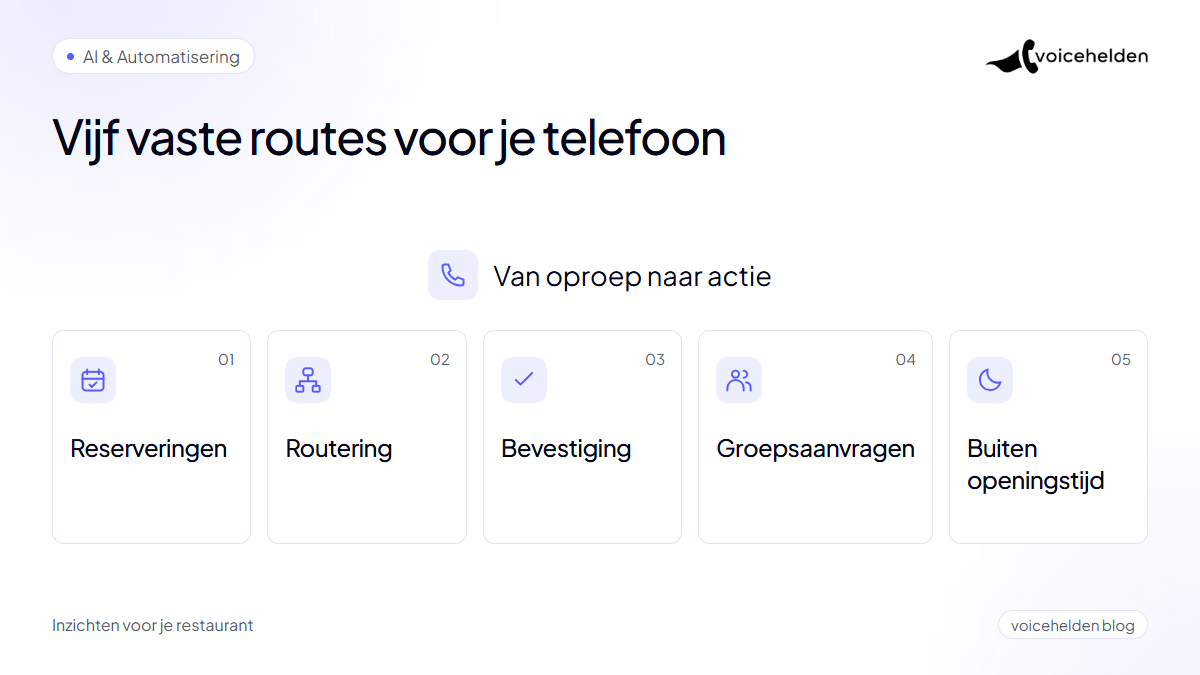
De meeste restaurants hebben hun betalingen, voorraadmeldingen, e-mailmarketing en social media geautomatiseerd. Hun telefoon? Nog steeds 100% handmatig. Dit zijn de vijf workflows die jaren geleden al geautomatiseerd hadden moeten zijn, en hoe je dat doet.
Noem één onderdeel van je restaurant dat nog volledig handmatig is, waar iemand fysiek aanwezig, volledig gefocust en op precies het juiste moment beschikbaar moet zijn om het überhaupt te laten werken. Voor de meeste uitbaters is het antwoord meteen duidelijk: de telefoon.
Betalingen? Geautomatiseerd. Voorraadmeldingen? Geautomatiseerd. Boekingsbevestigingen per e-mail? Geautomatiseerd. Maar zodra er een oproep binnenkomt, op vrijdag om 19:00 uur, op zondag om 23:00 uur, om 8:00 uur voordat er iemand in het pand is, moet iemand opnemen. En als dat niet gebeurt, gaat de beller ergens anders heen.
De telefoonoproep is de laatste grote niet-geautomatiseerde workflow in de moderne restaurantpraktijk, en hij kost restaurants meer dan welk ander operationeel gat ook.
Wat we bedoelen met het automatiseren van telefoonworkflows
Je telefoonworkflows automatiseren betekent niet dat je het menselijke uit je restaurant haalt. Het betekent dat je dezelfde logica die je al gebruikt voor betalingen en boekingen toepast op het ene kanaal dat nog volledig op handwerk draait. Zoals we uiteenzetten in ons artikel over intelligente gespreksroutering, betekent workflow-automatisering dat je de logica één keer vastlegt, en AI die bij elke oproep consistent laat uitvoeren, zonder dat je team erbij betrokken hoeft te zijn.
| # | Workflow | Zonder | Met VoiceHelden |
|---|---|---|---|
| 01 | Reservering boeken & bevestigen | Handmatige tijd, boekingsfouten, uitval in piekuren | 24/7 boekingen, geen fouten, piekuren gedekt |
| 02 | Routering op basis van intentie | Alle oproepen gelijk behandeld, urgent en routine botsen | Klachten direct geëscaleerd, routine automatisch afgehandeld |
| 03 | No-show-bevestiging & herinneringen | No-shows schaden omzet zonder waarschuwing vooraf | Automatische bevestiging verlaagt no-shows tot 30% |
| 04 | Groeps- & evenementaanvragen | Waardevolle oproepen wisselend afgehandeld of gemist | Elke groepsaanvraag vastgelegd en doorgezet |
| 05 | Afhandeling buiten openingstijden | Oproepen 's nachts & in het weekend naar voicemail, verloren | Elke oproep 24/7 beantwoord, boekingen rond de klok |
01 · Reservering boeken en bevestigen
Reserveringsoproepen zijn je grootste categorie binnenkomende oproepen, en juist de oproepen die tijdens de piekservice het vaakst wegvallen. Elke onbeantwoorde boekingsoproep is een direct, berekenbaar verlies, gemiddeld zo'n €90 per reservering. Dit automatiseren betekent dat elke beller die wil reserveren een direct, professioneel antwoord krijgt, ongeacht wat er in de zaal gebeurt.
In de praktijk: de beller noemt datum, tijd en aantal personen. De AI controleert de beschikbaarheid, legt de gegevens vast en stuurt een bevestiging. Geen medewerker nodig, geen terugbelactie, de reservering verschijnt direct in je systeem.
Intentie herkend: reserveren
Beschikbaarheid gecontroleerd
Gegevens bevestigd
Reservering vastgelegd ✓
02 · Routering op basis van intentie
Niet alle oproepen zijn gelijk, maar zonder automatisering worden ze wel gelijk behandeld. Een klacht van een boze gast concurreert met een vraag over parkeren om de aandacht van dezelfde medewerker. Intentiegerichte routering herkent binnen enkele seconden wat een beller nodig heeft: routinevragen automatisch opgelost, gevoelige of waardevolle oproepen direct doorgezet naar de juiste persoon.
In de praktijk: de AI herkent het type oproep, reservering, klacht, groepsaanvraag, algemene vraag, en past de routeringsregel toe die jij hebt ingesteld. Klachten gaan naar een manager. Groepsaanvragen naar je evenementencontact. Elke oproep krijgt de reactie die hij echt nodig heeft.
Intentie geclassificeerd
Routeringsregel toegepast
Automatisch oplossen of escaleren
Juiste persoon, juiste moment ✓
03 · No-show-bevestiging en herinneringen
No-shows zijn een van de meest schadelijke én best te voorkomen omzetlekken. Restaurants met automatische boekingsbevestigingen hebben 20-35% minder no-shows dan restaurants die op handmatige processen leunen. De telefoon is het meest effectieve bevestigingskanaal, en juist het kanaal dat zonder automatisering het minst consistent wordt gebruikt.
In de praktijk: zodra een boeking wordt gemaakt of ingeladen, plaatst VoiceHelden automatisch een bevestigingsoproep of -bericht op een ingesteld moment vóór de reservering. De gast bevestigt, annuleert of verzet. Je team ziet de uitkomst zonder de telefoon aan te raken.
Bevestiging geactiveerd
Gast reageert
Uitkomst geregistreerd
Tafelstatus bijgewerkt ✓
04 · Groeps- en evenementaanvragen vastleggen
Groepsreserveringen, gezelschappen van acht of meer, bedrijfsevenementen, besloten diners, leveren onevenredig veel omzet per oproep op. Eén groepsaanvraag die doorgaat, kan €500 tot €2.000 waard zijn. Deze oproepen komen bovendien op de slechtst denkbare momenten binnen, tijdens de service. Zonder automatisering gaan ze naar de voicemail. En voicemail betekent verloren.
In de praktijk: de AI herkent een groeps- of evenementaanvraag aan het aantal personen of de intentie, legt de kerngegevens vast, datum, aantal, gelegenheid, contact, en zet die direct door naar je evenementencoördinator. Is die niet beschikbaar, dan plant hij een concreet terugbelmoment en bevestigt dat met de beller.
Gegevens vastgelegd
Evenementencontact gewaarschuwd
Terugbelmoment gepland indien nodig
Aanvraag bevestigd ✓
05 · Afhandeling buiten openingstijden
Een aanzienlijk deel van de boekingsoproepen komt buiten openingstijden binnen: laat op de avond na de service, vroeg in de ochtend voordat het team er is, in het weekend en op feestdagen. In de meeste restaurants blijven die onbeantwoord, niet omdat het team er niet om geeft, maar omdat er niemand is. Met afhandeling buiten openingstijden wordt elk van die oproepen beantwoord, afgehandeld en vastgelegd voordat je team de volgende dag begint.
In de praktijk: buiten je ingestelde uren blijft VoiceHelden opnemen. Boekingen worden bevestigd. Vragen worden beantwoord met de informatie die jij hebt ingesteld. Oproepen die menselijke opvolging vereisen, worden vastgelegd en 's ochtends gemarkeerd voor je team. Geen oproep gaat verloren in het gat tussen sluiten en openen.
AI neemt direct op
Routine volledig afgehandeld
Complexe oproepen vastgelegd
Team bij opening geïnformeerd ✓
Voordat je automatiseert, een readiness-check met 6 vragen
Automatisering werkt het best als de logica die het uitvoert al helder is. Deze zes vragen helpen je die logica voor te bereiden voordat er een systeem wordt ingericht.
- Weet je hoeveel oproepen je per week mist? Zo niet, lees dan eerst onze gemiste-oproepen-tracker.
- Heb je je piekvensters in kaart gebracht? Zo niet, gebruik de overlapmatrix uit onze gids voor piekuren.
- Ken je je meest voorkomende oproeptypes? Reserveringen, vragen, groepsaanvragen, klachten, rangschik ze op volume.
- Heb je voor elk oproeptype een routeringsbeslissing? Wie doet wat, wanneer en hoe? Leg dit vast voordat een systeem het leert.
- Is je team gebrieft over wat automatisering afhandelt versus escaleert? Verwarring bij de overdracht is schadelijker dan geen automatisering.
- Heb je een terugbel- of escalatieprotocol voor uitzonderingen? AI handelt 73%+ van de oproepen af, je team heeft een helder plan nodig voor de rest.
De telefoon is geen onoplosbaar probleem. Het is de laatste handmatige workflow in een bedrijf dat bijna al het andere al heeft geautomatiseerd. Deze vijf workflows zijn niet theoretisch, ze draaien nu al in restaurants en handelen oproepen af die anders zouden zijn weggevallen, slecht aangenomen of op een voicemail beland waar niemand naar luistert.
De vraag is niet óf je deze workflows automatiseert. De vraag is hoe lang je het je kunt veroorloven dat niet te doen.
Alle vijf workflows draaien automatisch in VoiceHelden.
Leg je bellogica één keer vast, laat AI die bij elke oproep uitvoeren, 24/7, zonder één onderbreking van je service.
Binnen 15 minuten gemaakt en live. Gratis te bouwen en te testen. 7 dagen gratis, daarna vanaf €79 per maand, excl. btw. Kaart vooraf, opzeggen kan altijd. Of direct betalen met 20% korting, vanaf €63,20 per maand, excl. btw, met 30 dagen niet-goed-geld-terug.